Showing posts with label Royalty. Show all posts

Monday, 2 July 2012

First look at new Princess Diana movie


A new movie is being made about the last years of Princess Diana's life, before she was killed in a tragic car accident in Paris in 1997. The movie is called Caught in Flight and it's being directed by German director, Oliver Hirschbiegel who also directed Downfall, the biopic about Hitler's final few weeks alive, and part of the new medieval drama series, Borgia. 

The photo above is the first photo showing English actress Naomi Watts as Princess Diana. She def looks very like the princess, but some people close to Diana and Dr. Kahn, who is still alive, are apparently not very happy that it's being made. The movie focuses on  Princess Diana's life after her divorce and her romance with a Pakistani surgeon, Dr. Hasnat Kahn, who is played by Lost actor Naveen Andrews. Naomi Watts has also acted in King Kong and J. Edgar. Obviously, there's already been a movie about the Royal Family's reaction to Diana's death - The Queen, which Helen Mirren won the Oscar for. But, what are your thoughts about Caught in Flight? Are you excited to see it or do you think it's too soon for a Hollywood movie? 


Wednesday, 6 June 2012

The Duchess of Cambridge dazzles at the Diamond


Catherine, Duchess of Cambridge, Britain's newest princess and favourite style icon, once again chose some seriously beau numbers for this weekend's celebration of Her Majesty The Queen's Diamond Jubilee. A jubilee is to mark the anniversary of the monarch coming to the throne; not their birthday, as some performers at the Buckingham Palace Conference seemed to think... The awkward moment when...


For the river pageant, the Duchess chose to wear a red number from Alexander McQueen (top), the iconic British fashion house that also designed her wedding dress last year. For the service of thanksgiving at Westminster Abbey and the Royal Family's appearance on the balcony, Catherine also went for Alexander McQueen, proving he's something of a favourite (above). However, for the Jubilee Concert, the Duchess opted to wear a dress from Whistles, a high-end high street brand (below.)

Which is your favourite dress from the Jubilee Weekend? A lot of people have said they think the Duchess has a very similar sense of dress as Meredith Harper in Popular. Thoughts?


Monday, 27 February 2012

The Six Wives of Henry VIII


Henry VIII, who ruled England, Wales and Ireland from 1509 until his death in 1547, was famously married six times. Commitmentphobe or commitment-addict - who's to say?

Anyway, being married six times is and was extraordinary and in the years since, people have argued quite a lot about why one of the most powerful men in British history had such a messy private life. Debates in books and on the Internet between "fans" of the various wives often get quite vicious and part of the reason is that Henry VIII's romantic adventures helped radically change the face of history. As Dr. David Starkey wrote in his 2003 book on Henry's marriages, "The Six Wives of Henry VIII is one of the world's great stories ... It is more far-fetched than any soap opera; as sexy and violent as any tabloid; and darker and more disturbing than the legend of Bluebeard. It is both a great love story and a supreme political thriller .... What is strangest of all, it is true. And being true, it is supremely important."

There are few stories in History I love more than those of Henry VIII and his six very unlucky wives. As Starkey says, you can't make this stuff up!

1. Katherine of Aragon (1485 - 1536) Henry's wife from 1509 to 1533; she was divorced. The youngest daughter of the King and Queen of Spain, Katherine was originally married to Henry's elder brother, Prince Arthur. (It was this fact which was later used by Henry as a reason to divorce her. Conveniently, he decided marrying your brother's widow was against God's law at the same time as he also discovered he didn't find Katherine attractive anymore...) Arthur and Katherine were both teenagers at the time and Arthur died during a plague epidemic six months after the wedding, leaving Katherine a widow at the age of sixteen. For the next seven years, she remained in England while her father and father-in-law tried to renegotiate the treaty between their two countries. When her father-in-law Henry VII died in 1509, the 17 year-old Henry became King Henry VIII and almost immediately married Katherine, now twenty-three, in a private ceremony at Greenwich. Whether it was because he was in love with her, because of her powerful royal connections abroad or to please his advisers is anybody's guess. The young king - who was then tall, handsome and popular (what a difference 30 years and 30 stone would make...) - certainly seemed to find his dainty Spanish bride very appealing. In many ways, Katherine  of Aragon was a perfect queen. She was clever, dignified and well-connected. Henry soon began to take mistresses, but in public Queen Katherine was always treated with great respect. Early in their marriage, she also enjoyed great political power, which she often used to Spain's advantage, but in 1513, she also helped lead England's government in defeating an invading Scottish army (Henry was busy fighting an expensive and rather pointless war against the French.) Devoutly religious, Katherine was devastated when her only son, Henry, Duke of Cornwall, died at the age of six weeks. All her other pregnancies ended in heartbreak. The Queen finally gave birth to a healthy daughter, Mary, in February 1516, but eight years later she entered the menopause and could have no more children. In 1525, Henry began to seriously consider a divorce, in order to have a son with another wife. In 1527, he fell obsessively in love with one of Katherine's ladies-in-waiting, Anne Boleyn. Katherine fought the divorce tooth and nail, earning herself many devoted followers and the adoration of many of ordinary Londoners. However, her heroic defence of her marriage and her refusal to accept a divorce ironically ended up weakening the Church she was loved so much. With the Catholic Church unable to give Henry the divorce he wanted because of Katherine's opposition, Henry began to move further and further away from loyalty to the Pope. In 1531, Katherine was banished from Court and she never saw her husband again. She lived originally at The More, a lavish palace where she had over 200 servants; with her usual flair for melodrama, Katherine complained that it was like having a cell in Purgatory. She was officially divorced in 1533, but she never accepted the divorce as legal. She died of cancer in 1536 and she was survived by her 20 year-old daughter, Mary, who became Queen Mary Tudor in 1553. Some historians have been critical of Katherine and her stubbornness, but many more have praised her for the courage and determination she showed in resisting her husband's attempts to dismiss her.

2. Anne Boleyn (1507 - 1536) Henry's second wife from 1532/1533 until 1536; she was executed. The youngest child of Sir Thomas Boleyn and his well-connected wife, Lady Elizabeth, Anne was born in England, probably in the summer of 1507. Her father was the heir of his Irish grandfather, the Earl of Ormonde, one of the wealthiest and most powerful members of the Irish aristocracy; her mother was the daughter of the Duke of Norfolk, one of the greatest lords in England. Anne's father was a diplomat and she was sent abroad as a child to be educated as a companion to the Austrian and then the French royal families. She was fluent in French and she was also taught Latin, calligraphy, music, dance, theology, embroidery and poetry. Of medium height, with long dark hair, a delicate physique and beautiful dark eyes, Anne returned to England at the age of fifteen, although people would later observe that because of a childhood spent in Paris, she always seemed far more French than English. More nonsense has been written about Anne Boleyn than about any other queen in English history; there is absolutely no evidence to suggest that she was anywhere near as nasty, unpleasant, immoral or cruel as later popular legend suggested. In fact, as a young woman, Anne earned nothing but praise everywhere she went. Lively, fun-loving, intelligent, witty and apparently the best-dressed young woman of her generation, Anne had many admirers, all of whom she cleverly managed to keep at arm's length. Then, Henry VIII fell so violently, obsessively and tragically in love with her. Anne initially rejected the King's advances, because she did not want to become one of his many mistresses. Impressed by her, he proposed marriage and she accepted. That engagement lasted six years and in time, Anne came to be seen by many as the power behind the throne. Ambitious and intelligent, Anne used her new-found influence to promote Protestant and reformist theologians, although she herself always remained a Catholic. Despite this, her hatred of the Pope was intense and she rejoiced when England split with the Vatican in 1533. She was secretly married to Henry, probably in late 1532, and crowned queen in a magnificent ceremony in 1533. Her daughter, Elizabeth, was born that September. In many ways, Anne Boleyn was an excellent queen. She was intelligent, sophisticated and cultured; she patronised scholars, encouraged the arts, was a very, very generous patron of charity and she championed an end to death by burning for heresy. However, she incurred her husband's hatred by refusing to meekly accept his many adulteries and when she turned against the Reformation in 1536 because of its greed and its closure of the monasteries, her former political allies turned against her too. After two miscarriages, she was arrested on 2 May 1536 and taken to the Tower of London. A palace servant was tortured into providing evidence against her and four of her male friends and supporters were arrested and executed on the charge of having adulterous sex with her, including, horrifyingly, her own brother. At her trial, Anne behaved with great dignity and denied all the charges. The Lord Mayor of London wrote that she had been the victim of a terrible miscarriage of justice and all the evidence was false. She was beheaded on 19 May 1536 and went to her death bravely, according to the eyewitnesses, many of whom knelt as a sign of respect. Her daughter, Elizabeth, later became one of England's greatest rulers. Anne was called by one historian "the most important queen consort this country has ever had."

3. Jane Seymour (?1508 - 1537) Henry's third wife in 1536 and 1537; she died. The daughter of a country squire and his wife, Jane was a quiet, plain girl, with milk-white skin. She served briefly as a lady-in-waiting to Katherine of Aragon and Anne Boleyn, before Henry VIII developed a sexual interest in her in 1535. Jane initially seemed flattered by the King's interest, but she ultimately rejected them and his gifts of money. Jane was poorly educated, quiet, submissive and easily manipulated by those around her. In short, she was the opposite of Henry's first two wives and only twenty-four hours after Anne Boleyn's death, Henry asked her to marry him. They were married ten days later and Jane was pregnant within nine months. Deeply conscious of the fact that she had been born a commoner, Jane was strict with her servants - to the point of a possible O.C.D. She liked counting the number of pearl buttons they had on their dresses. She gave birth to the future King Edward VI in October 1537, but post-natal complications set in and she died in great agony two weeks later. Jane was given a splendid funeral and Henry was buried next to her, which has led to the idea that she was the wife he loved the most. In fact, his treatment of her often bordered on bullying and the reason he was buried next to the poor woman was almost certainly because she had given him a son.

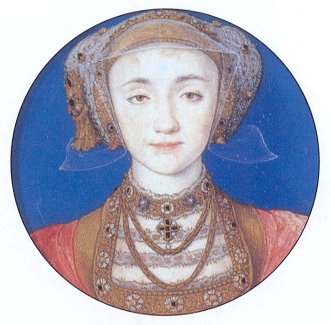
4. Anne of Cleves (1515 - 1557). Henry's fourth wife in 1540; she was divorced. The dumpy but likable daughter of a German duke, Anne was promoted by Protestants in Henry's government as a useful tool to build an alliance with an anti-Catholic group of German princes. Despite the politics behind it, the royal marriage was a disaster. Henry claimed Anne was ugly, smelly and boring; she can't exactly have found the porky prince much of a catch either. It ended in divorce six months later, with Anne receiving one of the largest divorces in human history as thanks for her co-operation.

5. Catherine Howard (?1523-1542). Henry's fifth wife from 1540 to 1542; she was executed. The young, sexy and fun-loving niece of the Duke of Norfolk, Catherine was brought to Court as a teenager to serve as a lady-in-waiting to Anne of Cleves. Apparently, from the moment the middle-aged Henry clapped eyes on her, he was smitten. Like a middle-aged billionaire and his young trophy-wife, Henry and Catherine were an odd pair. They were married within days of Henry's divorce from Queen Anne and the new queen enjoyed herself with parties, jewels, clothes and presents. She was a gossip, a flirt and a material girl, but harmless. However, rumours soon circulated that she had not been a virgin at the time she married and this led to an investigation into her private life. A love letter was found from the Queen to a handsome young courtier called Thomas Culpepper, written after her marriage and the Queen and her lover were both executed. Catherine's favourite lady-in-waiting and her secretary were both executed as well, for helping cover-up details of the queen's behaviour. Whether Catherine Howard was actually guilty of adultery is impossible to tell.

6. Katherine Parr (1512-1548) Henry's sixth wife from 1543 to 1547; she survived him. Elegant, well-mannered and a keen reader, Katherine Parr was a wealthy society widow when Henry asked her to marry him in 1543. Katherine had no desire to marry such a dangerous man, but felt she couldn't say no. She was attractive and mature, and she helped heal the rifts between the royal children caused by their father's constant re-marriages. A devoted Protestant, she wrote two prayer books but was savagely criticised by her husband on at least one occasion because he felt her views were too radical. She survived Henry when he died, fat, feared and foul-tempered in 1547, and she then married for love to Lord Thomas Seymour. Tragically, Katherine Parr died giving birth to Seymour's child eighteen months later. She was the first member of the royal family ever to be given the title "Queen of Ireland", before that it had simply been "Lady of Ireland". 

Fun fan video from the series The Tudors about the wives.

Monday, 6 February 2012

The Jubilee Begins!

Today is the sixtieth anniversary of when Her Majesty became The Queen. It marks the beginning of many months of festivities in the U.K. to mark the first time a monarch has sat upon the British throne for sixty years since the Queen's great-great-grandmother, Queen Victoria, who reached this milestone, known as her "Diamond Jubilee," back in 1897. Queen Victoria, who died in 1901, was the longest-ruling monarch in British history. However, if the current Queen remains on the throne until 2016, as we hope she will, then she will have that record. Queen Victoria will be bumped into second place and in third place will be the Queen's great-great-great-great grandfather, King George III, who ruled from 1760 to 1820.

Although today marks the start of the 2012 Jubilee celebrations in Britain, The Queen actually spent it fairly quietly by visiting a primary school and town hall in the pretty village of King's Lynn in northern England. There are no celebrations today, because it is also the anniversary of the death of The Queen's father, King George VI, who lost his battle with lung cancer on this day back in 1952. King George's moving battle with his speech impediment was captured last year in the Oscar-winning movie The King's Speech, with Colin Firth, Geoffrey Rush and Helena Bonham-Carter.

For a post about the King's death on my History blog, click HERE.

Monday, 4 July 2011

The Anne Boleyn Files reviews "Popular"


Claire Ridgway, creator of the fantastic and very successful website The Anne Boleyn Files, has reviewed Popular and here's a peak at some of the thing she had to say: -

"The novel follows the group through the events of their school year – the return to school in September, Kerry’s 16th birthday party, nights out, dates, balls, Christmas, non-uniform days, mock exams, Valentine’s Day, sports day, GCSE exams and the end of term – and everything that goes with it: drunken antics, hangovers, infidelity, stolen kisses, secrets, lies, fashion faux pas, disasters, break-ups, romance, heartache, bitching, “emergencias”, tall tales, revelations… You name it! The book is a fun read, just perfect for the beach or lazing in a sunny garden, and takes you back to your school days when every faux pas was an “emergencia”. In Gareth’s bio at the front, it says that “nearly all the book is based upon events that have happened during his schooldays – the more ridiculous they seem, the greater chance that they are close to real life”, well, Gareth, your school days must have been one hell of a ride!

So, even though this book has nothing to do with Anne Boleyn or Tudor history, apart from Gareth being an historian and the novel containing references to Anne and “The Tudors”, I would recommend it. Why? Because it’s fun and it’s by a great writer. If you enjoy “Sex in the City”, if you want to be reminded of the angst and madness of your school days, if you love Marie Antoinette, Anne Boleyn and Scarlett O’Hara, and you appreciate good modern fiction, then I’d recommend “Popular”. Gareth is already working on the sequel and I can’t wait to read it."

For Claire's full review, click HERE.

Sunday, 29 May 2011

New Marie-Antoinette casting


A few months ago, I posted the story that French actress Eva Green had been cast in the big screen adaptation of Chantal Thomas's fantastic novel, Farewell My Queen, the story of the relationship between Queen Marie-Antoinette and one of her servants, Agathe, who has a job as a Reader in the Queen's Household. The novel follows Agathe's worshipful respect for the doomed queen and her experiences living in the Palace of Versailles in the final week before the outbreak of the French Revolution. It's a really incredible novel and very atmospheric, capturing perfectly the terror that seized the palace in July 1789, so I can't wait to see the movie.

However, it turns out that since then, the role of Marie-Antoinette has been re-cast and German actress, Diane Kruger (above), will be playing the queen. Diane looks much more like the real Marie-Antoinette and Marie-Antoinette was Austrian, not French; that being said, both are fantastic actresses.

Agathe is being played by LĂ©a Seydoux; GĂ©rard Depardieu and Virginie Ledoyen will also co-star. Having read the novel, my predictions are that Depardieu will either play Captain de la Roche, the royal zoo keeper, or the King's historiographer; and my money's on Virginie Ledoyen playing Gabrielle, Duchesse de Polignac, the beautiful and controversial Versailles socialite.

Having now posted this online, I will almost certainly be proven wrong.

Either way, can't wait to see Farewell my Queen, which is due out later this year.

Tuesday, 24 May 2011

When Royalty meets the President


Just back from their honeymoon in the Seychelles, the Duke and Duchess of Cambridge carried out their first official royal duty as a married couple when they met President and First Lady Obama, who are on a state visit to the UK and Ireland this week. 

The meeting took place at Buckingham Palace and the Duchess's dress, for those fashionistas amongst you, is by Reiss.

Tuesday, 26 April 2011

Royal Wedding: The Other Queen Catherines


On Friday, Catherine Middleton will marry into the British Royal Family and one day, all being well, she will become the sixth English queen to be called Catherine. In a spirit of patriotic delightfulness, here is a run down of the other five!

1. Catherine de Valois (1401 - 1437) Probably best known today for being a character in the Shakespeare play Henry V, Catherine was the daughter of King Charles VI of France and his German queen, Isabeau of Bavaria. Her elder sister, Isabelle, had already been Queen of England before her when she had been married off at a very young age to King Richard II. Catherine's marriage in 1420 to England's handsome warrior king, Henry V, marked the end of the current wars between France and England. A tall, slim and beautiful blonde, Catherine was basically the medieval period's picture-perfect-princess. Unfortunately, the so-called "bride of peace" didn't have very long to enjoy life as Queen of England. Two years after the marriage and not long after the birth of their son, Henry, the King died on military campaign and Catherine was left a widow at the age of twenty-one. She caused quite the scandal a few years later by running off with her handsome Welsh servant, Owen Tudor, with whom she had three more sons and helped found the Tudor dynasty. Tragically, the ex-queen died in childbirth in 1437. In a much more creepy end to the story, Catherine's body was buried in an air-tight coffin which was discovered centuries later in the time of King Charles II - perfectly preserved! In what I think is a totally disgusting and pretty weird move, the famous 17th century diarist Samuel Pepys was allowed to view the body on his birthday and kissed its lips, boasting that his birthday treat had been to kiss a queen. Eh, yes, but one that's been dead for three hundred years. Weirdo.


2. Katherine of Aragon (1485 - 1536) The first of Henry VIII's six unlucky wives, Katherine was born in Spain in 1485 and initially married Henry's elder brother, Prince Arthur. When Arthur died during the plague epidemic of 1502, Katherine was married off to his younger brother, Henry, once he became king in 1509, despite the grumbling of certain English churchmen that marrying your dead brother's wife contravened Old Testament law. The marriage was a satisfactory one, with Katherine being both dignified enough to carry out the duties of a queen perfectly and she was prepared to look the other way at her husband's numerous affairs, which started almost as soon as the ring had been slipped onto her finger. However, Queen Katherine's six pregnancies resulted in only one healthy child - a daughter, Mary. By 1524, after fifteen years of marriage, she had passed the menopause and Henry was already considering divorcing his wife when he fell violently and obsessively in love with Lady Anne Boleyn, the nineteen year-old French-educated "it" girl of the Tudor court. Katherine, a devout Catholic, fiercely resisted the divorce but in the process, her stubbornness and bravery may actually have contributed to England's famous break with the Roman Catholic Church. She was banished from court in 1531 and stripped of her title in 1533. She refused to accept that her marriage was over right up to her death from cancer in 1536.

3. Catherine Howard (?1523 - 1542) The fifth of Henry's wives, Catherine was a party-loving teenager when the enormous, middle-aged monarch made her his mistress in 1540. He divorced his fourth wife, a German princess, in order to marry Catherine, much to the delight of her ambitious family who used Catherine's rise to the throne to destroy several of their political enemies. Catherine took no interest in politics and for the first year of the marriage, she seemed quite happy to spend, dance and party. She spent a fortune on clothes and jewels. However, after a royal tour of the north, she was placed under house arrest when allegations emerged that she had not been a virgin at the time she married the king. The investigation into Catherine's private life eventually uncovered strong evidence that she may have been having an affair with Sir Thomas Culpepper, reportedly the most handsome (and badly behaved) man in London. A love letter found in Thomas's rooms showed that this affair had started when she was actually married to the king. The poor, traumatised girl was sent to the executioner's block before her twentieth birthday. Today, she is still buried in the Tower of London.

Tamzin Merchant as Catherine Howard in Series Four of The Tudors

4. Katherine Parr (1512 - 1548) Henry VIII's sixth and final wife, he married her eighteen months after executing Catherine Howard. An intelligent and elegant thirty year-old, Katherine had already been widowed twice by the time she married the king. Terrified at what had happened to his other wives, Katherine Parr fairly obviously didn't want to become queen of England, but there was no way of saying "no" the marriage proposal without destroying her family's position. A devout Protestant, Katherine nearly suffered a nervous breakdown trying to cope with her bloated husband's unpredictable mood swings. One minute he was smothering her with gifts and affection, the next she was being threatened with arrest if she didn't learn to tone down her support for evangelical Protestantism. Henry died in 1547, leaving her one of the wealthiest women in Europe. She married again, this time for love, but died in childbirth eighteen months later.

5. Catherine of Braganza (1638 - 1705) This daughter of the King and Queen of Portugal was not beautiful, or even pretty, but whilst her husband King Charles II had numerous mistresses and over a dozen bastard children with them, he always treated his wife with great respect. In fact, it's almost certainly true that Charles II's best friend was his wife. Married in 1662, gentle Catherine was described as "a saint" by her royal mother-in-law and along with bringing the ports of Tangiers and Bombay to the British Empire as her wedding presents, she's also credited with introducing the custom of drinking tea to the British Isles. Which, frankly, makes her a hero. Seriously, though. Anyway, Catherine's failure to produce any living children meant that many politicians were urging King Charles to divorce her and marry the beautiful socialite, Frances Stewart (who formed the inspiration for the figure of Britannia on the 50p pieces, apparently.) Charles, however, gallantly refused to subject his faithful wife to such public humiliation and declared that if he couldn't have children with Catherine, then the throne would just have to pass to his younger brother James when he died. Despite her kind nature, Queen Catherine was the target for a public hate campaign in the 1670s because of her Catholic faith and she was briefly forced to avoid making appearances in public. By the time her husband died of kidney failure in 1685, she had recaptured the public's respect, as she deserved. Seven years later, though, she left Britain after becoming increasingly uncomfortable at the ultra-Protestant regime then in power. She went back to Portugal where she surprised everyone with her unexpected political skill by taking over the government on two occasions when her brother, King Pedro II, suffered a nervous breakdown. 


Saturday, 16 April 2011

The Fifth Year Indie Posse


"Every school has one of these and they vary only in degrees of how annoying they are..."

Although they spend their whole life trying to prove they don't care about cliques and popularity and all that kind of lame, cool-kid stuff, Coral Andrews' circle of friends are about as cliquey and judgmental as they come. If you want to measure  it, just mention any type of music that's actually in the charts or a recent X Factor winner. Rage against the machine, fo' sho'.  

GROUP STATS


Clique Nickname: "The Hipsters," "The Indies" or "The Zoo" (Note: The last one was created and used solely by Cameron Matthews and Imogen Dawson, BT9ers.)


Clique Leader: Coral Andrews (16)


Other Members of the posse: Joanne Sexton, Paula Flockley, EĂłin McEveritt, Patrick O'Shay, Philip Rodgers, Pauline Saville and, on the fringes, Hector Colliner, Callum Quigley, Alice Fenchurch and Patsy Harris.


Trademark/s: One guy or girl who secretly self-loathes themselves because they've fallen in love with one of the popular kids; a searing hatred of Simon Cowell, one accessory that clashes totally with everything else they're wearing, the exchange of far too many song lyrics with one another to prove how much they love each other and at least one guy friend who believes that wearing skin-tight trousers makes him genuinely attractive, when the reality is that skinny jeans make anyone who wears them instantly look like a castrated ferret. 

Never Without... Their i-Pod, skins or maybe a copy of "The God Delusion" to show how liberated and independent they are.


Group Heroes: Any philosopher so obscure that no-one else has ever heard of him. Same goes for their taste in music.


Favourite Belfast Haunts: The Empire, Fresh Garbage, outside City Hall


Most Frequently Spotted in school: The music rooms


Least Frequently Spotted in school: The sports fields


Most Infamous Quote: "I hate how soulless and evil capitalism is." - Joanne Sexton, whilst plugging earphones to her i-Pod.


Least Likely to hear them say: "I think it's really great how excited people are getting about Kate Middleton" or "I'm saving up for a Barbour jacket."


Key Phrase to avoid in conversation with them: "Isn't it great what the X Factor is doing for the music industry?"


Other Profiled Groups: The Upper Sixth Popular Girls, The First XVs

Monday, 14 March 2011

Kate Middleton: Style Icon


Anne Boleyn, Marie-Antoinette, the Empress Elisabeth of Austria and Princess Grace of Monaco were four royal women well-known for being style icons in their day. Now, with the exception of Vivienne Westwood, most people seem to think that Kate Middleton will be joining their ranks.

The Burberry trench coat which Kate Middleton wore on her recent visit to Belfast (above) sold out twenty-four hours after she and her fiancĂ©, Prince William, visited Northern Ireland. The tour, which completed their pre-marriage tour of the four parts of the United Kingdom, took place last Tuesday and I thought Prince William's pancake tossing lessons to the young girl outside Belfast City Hall were very entertaining. 

The Burberry coat worn by the future Princess Catherine retails at £650 (just over $1,000) and Burberry reported that the online supplies of the coat were gone by the time Lent started, the day after the royal visit to Belfast, which was publicised across the UK and in international media, too. A cheaper coat in a very similar design, offered by ASDA (the UK division of Walmart) increased its sales by 300% in the same period. It sells for about £22 (about $35).

When she attended a wedding back in December, in a black velvet Dulwich coat by Libelula, interest from American fashionistas in brand was particularly high, apparently. And the dress she wore for her engagement interview has ignited great interest in the Issa dresses, which it should, because it was a great choice. 


On a side note, it really irritates me when people start complaining and whining about the royal wedding. What do you want the future king to do? Get married in Gretna Green? Big days like this are good for the country. It's a holiday, it's a spectacle, and to be honest, I think that the world would be a much more boring place if we didn't do things like this. Plus, if Popular has taught me anything, it's that parties are always a good thing! Okay, some people have a "moral" objection to it because they don't agree with the monarchy, but they seem to be acting really surprised that the Prince of Wales's son is getting a wedding at all. I mean, you did know it wasn't a republic, didn't you? You must therefore have assumed when the second in line to the throne got married, it was probably going to be quite a big event. Monarchies aren't really known for running on minimalist chic! If you're a republican, fine, just don't start bitching about it to anyone who shows any amount of enthusiasm for what will be a really fun day. It's not like monarchists go round posting on your wall on normal days of the year, "Ha ha, guess what? We're not a republic. Fyl!" 

The Daily Mail reports that the future princess is more and more being seen as a fashion icon, because her personal style is "elegant and regal, yet age-appropriate to boot." I'm a big, big fan of the way she dresses. It's weirdly like the look and style I tried to capture for Meredith in Popular. Although, I would say Kate is a much, much nicer person! To quote from the article, which you can read in full here: -

"Ever since Kate appeared on the scene as Prince William’s girlfriend at St Andrews University, interest in her has been feverish — and that includes her sartorial selections. Kate’s fashion influence became clear as far back as 2007 when a dress she wore for her 25th birthday (a £40 Topshop tunic) sold out within 24 hours. ... fitted, nipped-in jackets, silhouette-hugging dresses and timeless accessories that are elegant and regal, yet age-appropriate to boot. 
Now, her style is much coveted — Kate has the power to spark a fashion stampede simply by wearing something once. 
She often plumps for British designers such as Temperley, Mulberry and Burberry, meaning her choices have been a good blend of patriotic and classic. But Kate’s fondness for the High Street stores Reiss, Jigsaw and Topshop also show she’s a girl who’s not afraid to mix and match affordable pieces with designer labels." 


Sunday, 6 February 2011

An interview with Christopher Gortner, author of "The Tudor Secret"

Early this week, I reviewed Christopher Gortner's novel The Tudor Secret, which you can read here, and I'm delighted to post this interview between Christopher and I discussing his new book and its inspirations. My thanks to the author.

Saturday, 5 February 2011

"The Tudor Secret" by Christopher Gortner


“There are moments that define our existence, moments that, if we recognize them, become pivotal turning points in our life. Like pearls on a strand, the accumulation of such moments will in time become the essence of our life, providing solace when our ends draw near. For me, meeting Elizabeth Tudor was one of those moments.” 

I received a review copy of The Tudor Secret on a Friday morning and I had it finished by Saturday evening. I also had a lot to do that weekend, almost none of which got done.

The Tudor Secret is Christopher Gortner’s third novel and like his previous two works, it is set in the sixteenth century. His first, The Last Queen, was set in Spain; his second, The Confessions of Catherine de Medici, in France. This time round, Gortner turns his attention to England in the sweltering summer of 1553 when the teenage King Edward the Sixth has disappeared from public view, amidst rumours that his chief minister, the Duke of Northumberland, is hiding the young king away from the public’s gaze in the hope of clinging onto power for himself. The king’s two sisters – thirty-seven year-old Mary and nineteen year-old Elizabeth – are understandably suspicious, particularly Mary, a devout Roman Catholic who is next in line to inherit the crown if Edward dies without children. Taking it upon herself to discover the truth, Princess Elizabeth journeys to London and it is here, in the sprawling Palace of Whitehall, a palace once built for her executed mother, that she first meets Brendan Prescott, a young equestrian working for the duke of Northumberland, the princesses’ apparent arch-enemy. From this fateful meeting, The Tudor Secret spins a truly addictive adventure story around the mystery of Brendan’s own identity and Elizabeth’s attempts to outwit whatever it is the duke is planning to do.
Related Posts with Thumbnails